We offer telemedicine no office visit required.

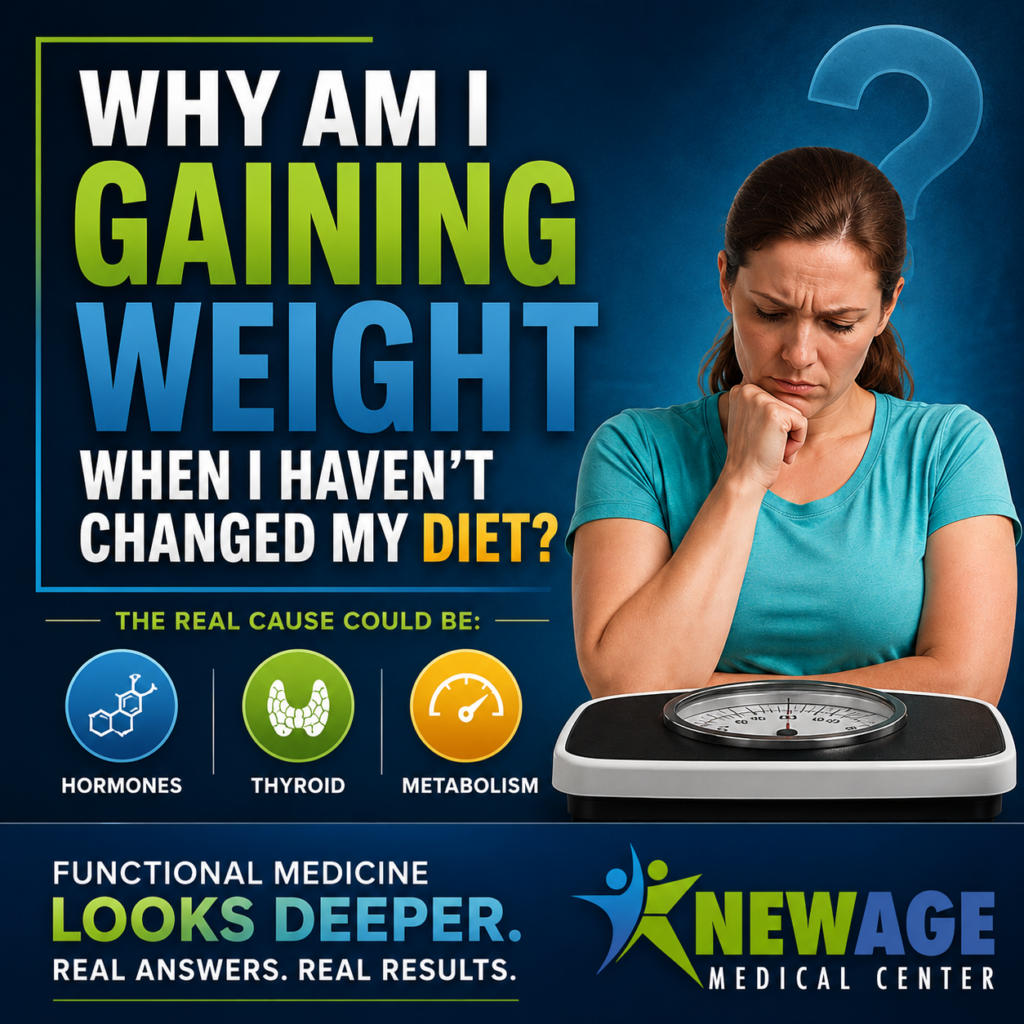
Why Am I Gaining Weight When I Haven't Changed My Diet?
You have not dramatically changed your diet. You are still active. Yet the number on the scale keeps moving in the wrong direction.
When unexplained weight gain occurs, eating habits are often blamed first. However, weight can be influenced by much more than calories alone. Changes in thyroid function, testosterone, estrogen, insulin sensitivity, cortisol and metabolism may all affect how the body stores fat and uses energy.
Through functional medicine, these underlying factors can be evaluated rather than simply assuming that you need to eat less or exercise more.
Your Hormones Can Change
What Your Body Does With Food
You can eat the same foods and maintain the same lifestyle while your body’s response to them changes.
Hormonal changes can affect metabolism, appetite, energy, muscle mass and fat storage. Testosterone levels may decline in men. Estrogen and progesterone can fluctuate in women, particularly during perimenopause and menopause.
As a result, a routine that worked for years may suddenly stop producing the same results.
This is why unexplained weight gain should sometimes be investigated rather than immediately treated with another restrictive diet.
“When a patient tells me, ‘I’m doing everything the same, but I’m gaining weight,’ that’s when we need to start asking why.”
Board-Certified in Internal Medicine and Nutrition
Testosterone does much more than affect sexual health.
Healthy testosterone levels support muscle mass, energy and metabolic function. When testosterone becomes low, muscle mass may decrease while body fat becomes easier to accumulate.
Other symptoms can occur at the same time, including fatigue, reduced motivation, changes in libido and difficulty maintaining strength.
Blood testing can help determine whether testosterone levels may be contributing to changes in weight and overall health.
Your Thyroid Plays a Major Role in Metabolism
The thyroid helps regulate how the body uses energy. Therefore, changes in thyroid function may affect metabolism, energy levels and body weight.
When thyroid function is not optimal, patients may experience unexplained weight gain along with fatigue, feeling cold, constipation, dry skin, brain fog or other symptoms.
Comprehensive testing can help determine whether thyroid function should be investigated as part of a patient’s overall weight management strategy.
Insulin Resistance Can Make Weight Loss More Difficult
Insulin helps the body manage glucose and energy. However, when cells become less responsive to insulin, the body may compensate by producing more of it.
Over time, this can make fat storage easier and weight loss more difficult.
Fasting glucose, insulin levels and other metabolic markers can be evaluated to provide a clearer picture of how effectively the body is processing energy.
Instead of guessing, treatment decisions can then be based on measurable information.

Board-Certified in Internal Medicine and Nutrition
Dr. David Moreno has helped patients throughout the Brooksville area improve their health through personalized medical care for more than 25 years. His philosophy centers on education, prevention, and treating the individual rather than simply managing symptoms. Read Full Bio >>
Traditional weight-loss advice frequently begins with the same recommendations: eat less and exercise more.
Those recommendations can certainly be important. However, they do not explain why two people following similar lifestyles can experience completely different results.
Functional medicine looks deeper.
Hormones, thyroid function, metabolic health, inflammation, nutritional status and other factors can be evaluated together. Once potential obstacles are identified, an individualized plan can be developed around what is actually happening inside the body.
Stop Guessing About Why You're Gaining Weight
At New Age Medical Center, weight management is approached as more than a number on the scale.
Comprehensive blood testing can be used to evaluate hormone levels, thyroid function, metabolic markers and other factors that may be contributing to unexplained weight gain.
The Benefits of Looking Deeper
Identify potential underlying causes
Instead of assuming that diet is the only problem, other factors affecting weight can be investigated.
Use real data instead of guesswork
Laboratory testing provides information that can help guide treatment decisions.
Create a personalized approach
Treatment can be developed around the individual rather than relying on a one-size-fits-all weight-loss program.
Look beyond short-term weight loss
The goal is not simply losing pounds. Improving metabolic and hormonal health can support long-term health and wellness.
Why Choose New Age Medical Center?
Under the direction of Dr. David Moreno, New Age Medical Center combines functional medicine, comprehensive laboratory testing, hormone evaluation and personalized treatment to help patients better understand what may be affecting their weight.
Why am I gaining weight even though I haven’t changed my diet?
Weight can be affected by more than calorie intake. Hormonal changes, thyroid function, insulin resistance, metabolic changes, stress and other factors may contribute to unexplained weight gain.
Can hormone imbalance cause weight gain?
Hormonal changes can influence metabolism, appetite, muscle mass and fat storage. Testosterone, estrogen, progesterone, thyroid hormones and cortisol may all play a role.
Can low testosterone make it harder to lose weight?
Low testosterone may be associated with decreased muscle mass, reduced energy and changes in body composition. Testing can help determine whether testosterone levels should be evaluated as part of an overall treatment plan.
Can thyroid problems cause unexplained weight gain?
Changes in thyroid function can affect metabolism and energy use. Weight gain may occur alongside symptoms such as fatigue, feeling cold, constipation, dry skin or brain fog.
How does functional medicine evaluate unexplained weight gain?
Functional medicine can use medical history, symptoms and laboratory testing to evaluate hormones, thyroid function, glucose and insulin regulation, nutritional status and other metabolic factors that may influence weight.
Do I need weight-loss medication to lose weight?
Not necessarily. The appropriate approach depends on the individual. Medication may be appropriate for some patients, while hormonal, metabolic, nutritional or lifestyle factors may need to be addressed for others.